
Drone Surveying for Construction: Boost Efficiency in MA
Ever feel like you’re running a construction project with one eye closed? You have plans and a crew, but keeping track of every detail on a sprawling site feels almost impossible. Delays creep in, budgets stretch thin, and a small mistake early on can become a giant, expensive headache later.
This is where modern drone surveying for construction is changing the industry. It gives you a clear, accurate view of your entire project at any time.
You are not just building a structure; you are coordinating a massive, complex operation of materials, machinery, and people.
Having the right information at the right time is crucial. Using a surveying drone is about gaining control and insight that was once out of reach. This technology empowers you to manage projects with greater efficiency and confidence.
Ditching the Old Ways: Why Drones Are a Game-Changer
Moving from traditional methods to drones is a huge leap forward. Construction companies in Massachusetts and across New England are finding that the benefits go way beyond impressive aerials. They affect the bottom line, crew safety, and project timelines in very real ways.
Exceptional Accuracy and Data Quality
You might think a flying camera cannot be as accurate as someone on the ground, but the technology is impressive.
With the help of Ground Control Points (GCPs) and a base station, drone maps can achieve high precision. This means you get centimeter-level accuracy for your project data.
Some surveying drone models also use technologies like LiDAR (Light Detection and Ranging).
LiDAR sends out pulses of light to measure distances, creating extremely detailed 3D point clouds. This level of detail from lidar data means fewer errors in planning, which prevents costly rework down the line.
Saving Time is Saving Money
Consider how long it takes a traditional survey crew to complete a land survey on a 100-acre commercial site. It could take them a week or more, depending on the complexity of the terrain. A mapping drone can fly that same site and capture all the necessary data in just a few hours.
This speed gives you critical data much faster, so you can make decisions in real time. You can check stockpile volumes daily instead of weekly or verify grading work almost instantly.
On a construction project, every day saved is money earned because you can cover large areas so efficiently.
A Safer View from Above
Construction sites are full of hazards. Sending a surveyor to walk across unstable ground, near heavy machinery, or on steep inclines creates risk. Drones completely remove this human element from the hazardous parts of data collection.
The drone operator can stay in a safe location while the drone flies over dangerous areas. This dramatically reduces the risk of accidents and injuries.
See the Whole Picture, All the Time

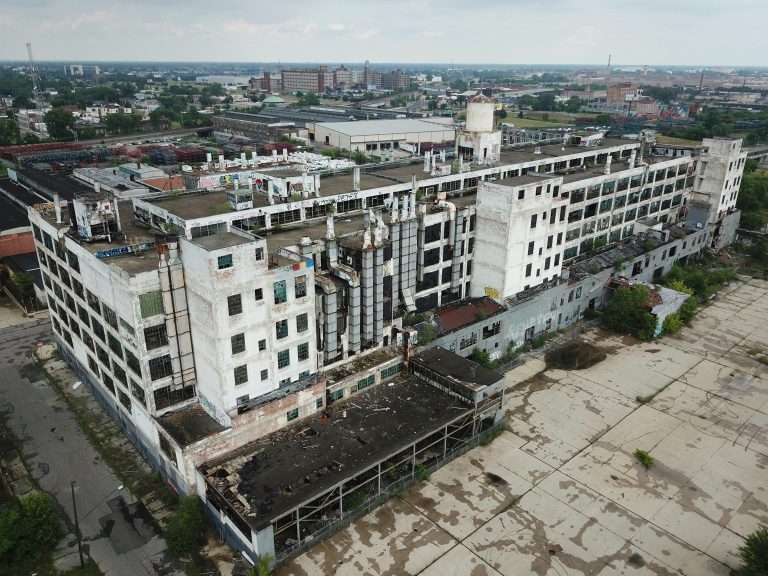
A persistent problem in construction management is simply knowing what’s happening everywhere at once. A drone survey gives you a complete snapshot of your site on a regular basis. You can conduct a drone flight weekly, or even daily if needed, to stay updated.
This allows for incredible progress monitoring. You can overlay the drone data on top of the design plans to see if work is proceeding correctly.
This visual record is also a powerful tool for communicating with clients and stakeholders, keeping everyone on the same page.
Choosing the Right Drone and Software
Selecting the correct equipment is foundational for a successful drone program. The market offers a wide range of drones and software solutions, each suited for different project scales and requirements. Understanding your options will help you get the most out of your investment.
Selecting the Right Surveying Drone
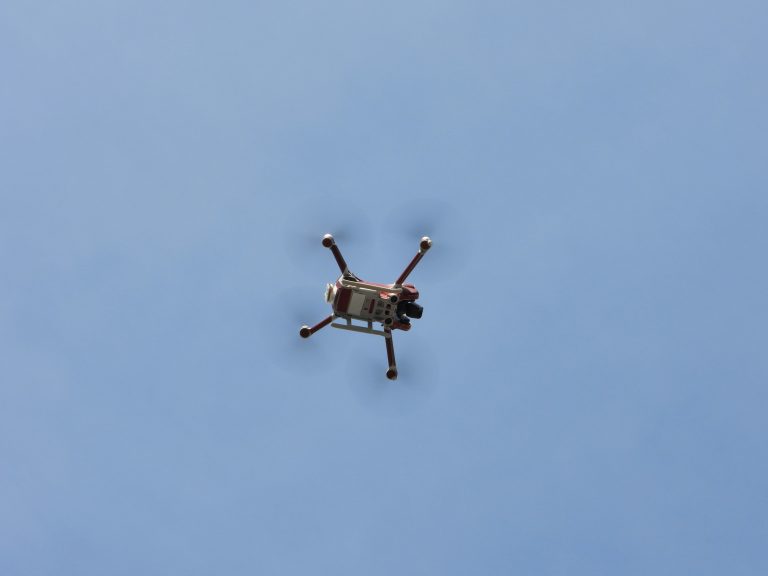
Drones used for surveying fall into different categories. The DJI Mavic series, for example, offers an excellent entry point and can be considered an affordable drone for smaller projects.
For more demanding and larger-scale jobs, the DJI Matrice series, like the DJI Matrice 400 RTK, provides superior flight time, payload capacity, and durability.
Other industry leaders produce competitive models, such as the Autel Evo, SenseFly, and the Anzu Raptor, each with specific strengths.
The choice depends on the size of the areas you need to cover and the level of detail required.
Enterprise models often feature built-in RTK capabilities for centimeter-level accuracy without extensive ground control.
Payloads and Sensors
The sensor is the heart of the mapping drone. The standard is a high-resolution RGB camera, often a model from the DJI Zenmuse line, which is perfect for drone photogrammetry.
These cameras are engineered to capture sharp, detailed images needed to generate orthomosaics and 3D models.
For more advanced applications, you might need a specialized payload.
The MicaSense RedEdge-P is a multispectral sensor that captures data across different light spectrums, which is useful for assessing vegetation health or land cover. LiDAR sensors are another powerful option for creating dense point clouds through dense vegetation.
Mapping Software and Automation

The drone is only one part of the mapping solution. Powerful drone software is necessary to plan flights and process the collected data. Software like DJI Terra allows pilots to create automated flight plans and then process the imagery to create accurate maps and models.
For companies looking to fully automate data collection, the DJI Dock offers a groundbreaking approach.
This is an autonomous takeoff, landing, and charging station that can house a drone. It enables a drone to perform repeated, pre-programmed missions without a pilot physically on site, perfect for daily progress monitoring.
Practical Applications on New England Job Sites
The technology is impressive, but how will it help you on a project in Maine or a busy site in New Hampshire?
The applications are incredibly practical and solve everyday problems faced by construction managers and engineers. Drone mapping helps streamline workflows from start to finish.
Pre-Construction Site Planning
Before you even break ground, a drone can perform topographic surveys to give you an extremely accurate map of existing conditions.
This helps architects and engineers with site design and planning. You can understand drainage patterns, identify potential challenges, and plan logistics with confidence based on up-to-date information.
Active Construction Monitoring
This is where a construction drone truly excels. Regular flights let you track progress with an unmatched level of detail. Drone mapping helps in several key areas during this phase.
- Earthwork Calculations: Easily perform cut and fill analysis to ensure your earthwork contractors are moving the right amount of dirt.
- Stockpile Management: Accurately measure stockpile volumes for materials like gravel or sand, so you can verify invoices and manage inventory.
- Quality Assurance: Overlay drone data with design plans to catch errors early before they become expensive problems.
- Safety Audits: Identify potential hazards from the air without sending personnel into dangerous areas.
- Progress Reporting: Share visual progress reports with investors or clients, giving them a clear, easy-to-understand update.
Post-Construction As-Builts & Handover

When the project is done, you need to deliver accurate as-built records. A final drone survey captures the finished site in its entirety. This creates a perfect digital record for project handover.
This data is invaluable for facility managers who will take over the property. They have a precise map of everything, which helps with future maintenance and planning. It’s the final piece of the puzzle, documenting that the project was built to specification.
Choosing the Right Drone Partner in New England
If you’re a business in Massachusetts, Maine, or New Hampshire, you want a local drone expert who understands the terrain and regulations.
Not all drone operators are the same. Picking the right one is important to getting quality results.
First, make sure they are fully licensed and insured. The drone pilot must have an FAA Part 107 Remote Pilot Certificate. Also ask for proof of liability insurance specifically covering commercial drone operations.
Look for experience and case studies on other construction projects. A company that specializes in real estate photos might not have the right equipment or drone software for producing survey-grade maps.
You want a team that understands your needs and can provide comprehensive drone solutions.
A professional partner will also have a clear privacy policy on their website. They will be transparent about how data is handled.
Finally, inquire about their support and maintenance plans, such as DJI Care Enterprise. This shows a commitment to keeping their equipment in top condition. A reliable partner helps you establish a robust and effective drone program.
Conclusion
In the end, drone surveying for construction is about making smarter, more informed decisions.
It replaces guesswork with accurate data and gives you a level of project oversight you’ve never had before. Drones enable you to create accurate records, reduce risk, and save an enormous amount of time.
For any modern construction, real estate, or infrastructure project, adopting these new surveying techniques is a competitive necessity.
Integrating drone mapping into your workflow will transform how you manage projects from the ground up.